
This is part 3 of 4 in the series: Explain My Property Taxes. Topic is county taxes.
Going into this 4-part series, this is the one I knew the least about, likely because it is the smallest of the four dollar amounts on my tax bill every year. Below is the amount I pay to Gateway every year.
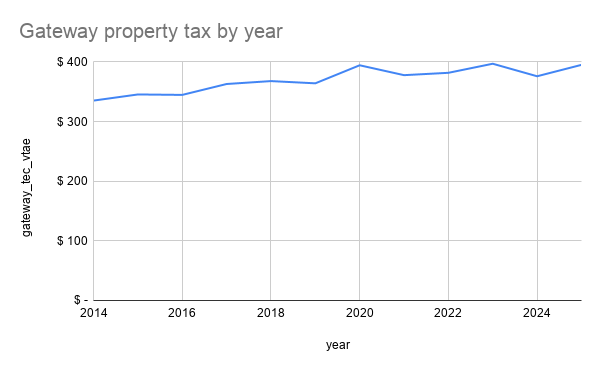
Of note, the amount paid has grown less than the rate of inflation, and the percentage of our total tax bills has stayed flat at 4%. Kudos to the community college district.
Oversimplifying how it works #
- District sets spending for new year
- Non-debt spending can only increase from prior year by percentage of net new construction
- Add the debt service payments to get total levy
- Subtract state aid from total levy, remainder is property tax levy
- Divide property tax levy into total valuation to get tax rate
- Produce tax bills, where amount = your valuation * tax rate
State aid is the only interesting part #
The state kicks in aid via three mechanisms:
- Property tax relief - I love this one, sarcastically. The state legislature boldly states they will lower your property taxes … by using your income tax to help fund community colleges. Super, thanks. They allocate a big pot of money, then distribute it based on a district’s equalized value. It’s taking money from my left pocket instead of my right pocket and expecting me to be thankful.
- Equalizing aid - This is another big pot of state money, but it is allocated inversely to the wealth of a community. Wealth is determined by property value per student. If the property in your community is expensive, your community college gets less aid. If everyone in your community tears down their house and lives in tents, you’ll get more aid.
- Outcome based funding - I love this one, non-sarcastically. The state allocates more money to those community colleges that perform better on a series of metrics such as job placement. Radical notion is that quantifiable results thing.
The community college district is a very low burden on our total property tax bill, and it has managed to stay that way for as long as I’ve lived here (13 years). Their costs have risen lower than inflation, and at least part of their funding is tied to performance. Maybe we could get the community college district to run the budgets of the other three taxing authorities?
Next up: Part 4, RUSD